
Factors That Influence the Choice of Foundation Method
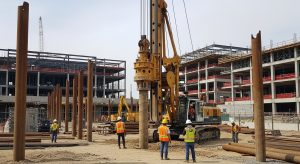
Selecting the right piling services begins with understanding how soil characteristics directly impact foundation choices. Certainly, the strength and properties of soil beneath a structure play a major role, which brings us to the core Factors That Influence the Choice of Foundation Method. When the soil bearing pressure reaches 100kN/m² or higher, shallow foundations can effectively support structures up to four stories. However, if the ground conditions can’t provide sufficient bearing capacity, deep foundations become necessary.
We must consider several critical factors before finalizing any foundation design. The groundwater table, for instance, significantly influences our foundation selection—when it’s well below the surface, shallow foundation footings typically work fine. The type of soil also determines the foundation’s load-bearing capacity, and a high water table can lead to dampness and hydrostatic pressure issues. In fact, geotechnical engineers provide essential information about bearing capacity and ground conditions in their reports, helping us make informed decisions. Throughout this article, we’ll explore all the key factors that influence foundation choices and how professional piling services can address even the most challenging site conditions.
Geotechnical and Environmental Factors
The foundation method chosen for any structure depends greatly on what lies beneath the surface. Geotechnical factors form the literal bedrock upon which all construction decisions rest.
Soil type and stability
The ground beneath your structure directly determines foundation performance. Clay soils absorb water and swell when wet, then contract during dry periods, creating a constant cycle of expansion and contraction that can damage foundations. This reaction becomes even more pronounced in areas with reactive clays that are sensitive to moisture changes. Sandy soil, while draining quickly, can shift easily during heavy rainfall, potentially causing foundation settling. Loamy soil provides excellent foundation support due to its balanced properties and even moisture handling.
Professional soil testing evaluates bearing capacity, which determines how much weight soil can support before shifting. High bearing capacity soils like rock, well-graded sand, and gravel can handle significant weight, making them ideal for building foundations without additional support. Alternatively, soils with low bearing capacity often require specialized foundation solutions such as piling services.
Water table and frost line depth
The water table—that underground boundary where soil becomes fully saturated with groundwater—plays a crucial role in foundation health. As this level rises, it creates hydrostatic pressure against foundation walls, potentially causing cracks, bowing, or complete foundation failure. In coastal areas, rising sea levels elevate groundwater tables, introducing saltwater that corrodes building foundations more aggressively than freshwater.
Furthermore, frost line depth determines how deep foundations must extend to prevent frost heave damage. In regions with seasonal ground freezing, foundations must reach below the frost line or utilize specific insulation techniques. Frost protected shallow foundations (FPSF) can be a practical alternative to deeper, more expensive foundations in cold regions.
Climate and seasonal moisture changes
Seasonal weather patterns dramatically affect soil behavior. During summer months, increased temperatures can dry out soil, causing it to shrink and create gaps beneath foundations. Meanwhile, heavy rainfall saturates the ground, leading to soil expansion that puts upward pressure on foundations.
The cycle of expansion and contraction becomes especially problematic with climate change introducing more extreme weather patterns. Prolonged dry conditions followed by sudden heavy rainfall—increasingly common in many regions—exacerbate foundation issues. These climate-driven challenges often necessitate specialized foundation solutions, including various piling services to ensure structural integrity despite changing environmental conditions.
Load and Structural Demands
Beyond soil conditions, understanding various forces acting on a structure represents another critical factor in foundation selection. Every building transfers weight and pressure through its foundation system into the ground below.
Types of loads acting on foundations
Foundations must withstand multiple force types simultaneously. Dead loads consist of the permanent weight of construction materials incorporated into the building, including structural components, walls, and fixed equipment. These loads greatly affect structural behavior, particularly during dynamic events. Live loads result from occupancy, furniture, stored materials, and temporary elements—varying over time and location. Environmental loads include wind pressures that can damage structural elements and seismic forces that shake, rock, or twist structures. Additionally, foundations may experience settlement loads when supporting soil subsides, creating differential pressure points.
Dynamic vs static load considerations
The distinction between static and dynamic loads substantially influences foundation design decisions. Static loads remain constant—applied slowly until reaching their maximum point without changing in strength or position. These include dead weights and permanent fixtures that exert steady pressure on foundations.
Conversely, dynamic loads vary in magnitude, direction, and application speed. These forces—like those from earthquakes or machinery vibrations—can exert significantly greater pressure on foundations compared to static loads due to acceleration factors. Foundation designers must account for both types, recognizing that dynamic loads often determine minimum foundation requirements, particularly when choosing deep foundation systems like those used in professional piling services.
Designing for seismic zones
In earthquake-prone regions, foundation engineering demands specialized knowledge beyond typical structural load calculations. Seismic design creates foundations capable of withstanding ground motions while minimizing superstructure damage. Key considerations include:
- Ductility and energy dissipation capabilities that allow materials to absorb seismic energy without brittle failure
- Base isolation systems that decouple ground motion from the building structure
- Tie beams connecting footings and piles to ensure uniform distribution of seismic forces
Reinforced concrete mat foundations have advanced considerably for seismic applications, though questions remain regarding their performance during actual events. Notably, foundation designs must accommodate not just vertical forces but also lateral pressures and overturning moments—factors particularly important when using piling services in seismic zones.

Foundation Options and Their Applications
The foundation you select determines how well a structure will distribute loads and resist environmental forces throughout its lifespan.
Overview of shallow foundation types
Shallow foundations work effectively when the soil near the surface possesses sufficient strength. These include spread footings (concrete pads supporting individual columns), strip footings (continuous foundations supporting walls), combined footings (supporting two or more columns), and mat foundations (thick slabs covering the entire building footprint). Typically placed less than 10 feet deep, shallow foundations prove ideal for residential homes and structures with lighter loads.
Deep foundation systems explained
Deep foundations transfer structural loads to stronger soil layers far below the surface. Common types include pile foundations (long, slender elements driven or drilled into the ground), caissons (large-diameter drilled shafts filled with reinforced concrete), and pier foundations (similar to piles but constructed by drilling and pouring concrete in place). These systems become necessary when surface soils lack adequate bearing capacity.
Choosing between piles, caissons, and rafts
Your selection primarily depends on:
- Soil conditions (poor surface soils require deep systems)
- Building weight (heavier structures need deeper support)
- Site constraints (property lines, adjacent structures)
- Water table levels (high water tables often necessitate specialized systems)
For instance, piles excel at transferring loads through weak surface soils, whereas mat foundations distribute loads across larger areas for structures on moderately weak soils.
How piling services support complex builds
Professional piling services provide critical solutions for challenging construction scenarios. They offer expertise in driven piles, marine construction, and specialized techniques like helical piles that require minimal excavation—perfect for limited-access areas. Moreover, these services ensure immediate load-bearing capacity without waiting for concrete to cure, substantially reducing construction time.
Regulatory, Economic, and Practical Aspects
Regulatory frameworks and practical considerations ultimately determine whether a foundation design moves from blueprint to reality.
Building codes and geotechnical reports
Building codes establish minimum requirements for foundation design and installation to ensure structures can withstand various hazards. The International Building Code mandates geotechnical investigations for evaluating soil classification, strength, and load-bearing capacity. These investigations become particularly critical in areas prone to expansive soils or where deep foundations will be used. A comprehensive geotechnical report provides essential data, including soil boring logs, water table elevation, and foundation design recommendations. First and foremost, this report guides foundation selection by identifying soil-bearing capacity, mitigation strategies for problematic soils, and settlement expectations.
Balancing cost with performance
Foundation costs typically represent 10-15% of a project’s total construction budget. Therefore, selecting the appropriate foundation type often results in significant cost savings without compromising structural integrity. Within this context, value engineering (VE) examines the relationship between function, quality, and cost to determine optimal solutions. Engineers must weigh initial construction expenses against long-term performance, considering factors like maintenance requirements and potential future modifications.
Ease of construction and site logistics
Even the most technically sound foundation design requires practical implementation consideration. Site preparation involving clearing vegetation, proper excavation, and adequate drainage directly impacts foundation performance. Furthermore, local material availability, skilled labor access, and construction equipment significantly influence foundation selection. Site constraints such as weight restrictions on public roads or noise limitations near residential zones may restrict construction activities. Subsequently, professional piling services must account for these logistical challenges when implementing foundation solutions, especially in confined urban environments.
Conclusion
Selecting the right foundation method ultimately requires a comprehensive approach that considers multiple interconnected factors. Soil characteristics certainly serve as the primary determinant, with bearing capacity directly influencing whether shallow or deep foundation systems become necessary. Additionally, environmental considerations such as water table levels, frost line depth, and seasonal moisture variations play crucial roles in foundation durability and performance over time.
The structural demands placed on foundations also deserve careful attention. Dead loads, live loads, and environmental pressures all create unique stresses that foundations must withstand. Therefore, understanding both static and dynamic forces becomes essential, especially in seismic zones where specialized design considerations are paramount.
Though technically sound solutions exist for almost any building challenge, economic and practical factors often dictate final decisions. Building codes establish minimum requirements, while geotechnical reports provide site-specific guidance that helps balance cost with performance. Construction logistics and site constraints further narrow feasible options.
Professional piling services offer specialized expertise for challenging conditions where standard foundation methods prove inadequate. These services address poor soil conditions, high water tables, and restricted access sites through tailored solutions like driven piles, helical systems, or caissons.
The foundation literally supports everything above it, making its selection among the most consequential decisions in the construction process. A well-designed foundation system, chosen through careful analysis of all relevant factors, ensures structural integrity, occupant safety, and building longevity regardless of site challenges.