
Why Structural Beams Are Critical in Weak Soil Conditions
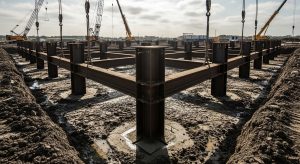
Structural integrity begins beneath your feet, and choosing the right piles and ring beams contractor can make all the difference when building on challenging terrain, a necessity that highlights Why Structural Beams Are Critical in Weak Soil Conditions. Did you know that foundations typically account for approximately 18% of a home’s overall construction cost? This significant investment deserves careful consideration, especially when soil conditions are less than ideal.
Poor soil composition directly impacts foundation stability and can lead to serious structural problems if not properly addressed. Indeed, when soil is too wet, too dry, or improperly compacted, it can cause settlement of the entire structure. We’ve seen firsthand how inadequate soil bearing capacity results in uneven floors, shifting foundations, and extensive damage to homes. Consequently, understanding the relationship between soil types and foundation systems becomes essential for any construction project.
In our experience, the quality of soil fundamentally affects both how we build and the long-term integrity of the finished structure. Without a thorough understanding of soil properties, we risk compromising the safety and stability of buildings. Furthermore, different soils have varying bearing capacities, making this a critical parameter when designing foundations that will stand the test of time. This is exactly why structural beams play such a vital role when building on weak soil conditions.
The Problem with Building on Weak Soil
Building on weak soil creates a precarious foundation for any structure. Understanding the risks involved, and engaging a qualified piles and ring beams contractor to address them, can save homeowners from costly repairs and dangerous structural failures. More than 80% of all structural defects are caused by soil movement under the foundation, making soil conditions the leading cause of foundation problems.
Signs of soil-related foundation failure
Foundation issues often begin subtly before escalating into major structural problems. When soil beneath a foundation shifts, settles, or expands, it manifests in several recognizable ways. Doors and windows may become misaligned and difficult to open or close. You might notice gaps around windows or doors, sloping floors, or cracks in ceilings and walls.
Exterior signs include stair-step cracks in brick walls, chimneys pulling away from the house, and gaps above windows and doors. These symptoms appear because parts of the foundation are sinking at different rates—a phenomenon experts call “differential settlement”. Additionally, foundation cracks, uneven concrete slabs, and water damage near the foundation indicate potential soil-related issues.
Real-world examples of structural issues
The financial impact of building on poor soil can be devastating. On average, homeowners pay around $3,980 to repair foundation issues. However, major foundation repairs requiring hydraulic piers can cost $10,000 or more. Moreover, the cost disparity between regions is significant—repairs average $42,500 in low-risk states with favorable soil conditions versus $113,000 in higher-risk states with problematic soil.
A stark example comes from a commercial development in Southern California that proceeded without proper geotechnical investigation. Two months into construction, the concrete slab began cracking due to differential settlement. This oversight led to redesigns, soil stabilization, and reinforcement retrofits costing over $700,000. The culprit was undetected low bearing capacity soil with moisture-sensitive clay layers.
Why traditional foundations may not be enough
Traditional trench foundations become inefficient beyond 2cm in depth, making them inadequate for unstable or weakened soil. Expansive clay soils that swell when wet and shrink when dry put tremendous pressure on conventional foundations, forcing walls inward and causing settlement.
Similarly, loose sandy soils lack cohesion and may shift under pressure, making them unsuitable for heavy structures without specialized foundation systems. During earthquakes, liquefaction of saturated soils can cause settlements of up to 10 inches, potentially fracturing utility lines and compromising structural integrity.
Non-conventional foundations—although more costly and time-consuming—become necessary on problematic soils. For instance, reinforced ground beams typically add 7-14 days to the foundation stage, but this investment helps prevent the catastrophic consequences of building on unstable ground without proper support.
How Structural Beams Solve Soil Challenges
When conventional foundations fail, structural beam systems offer innovative solutions for building on problematic soils. Professional piles and ring beams contractors understand that these specialized systems can transform unbuildable sites into solid construction platforms.
Bridging unstable ground
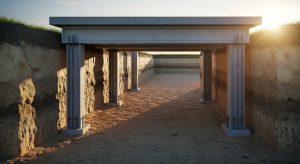
Grade beams function as horizontal ties between footings or pile caps, effectively distributing building loads across weak soils. Unlike traditional foundations that might sink or shift, these reinforced concrete members span across unstable areas, creating a stable platform for construction.
In pier and grade beam systems, vertical piers (typically concrete or steel) are drilled deep into the ground until they reach stable soil, while horizontal grade beams connect these piers at the surface. This combination is particularly effective on sites with poor bearing capacity, as the beams transfer loads from bearing walls to disparate foundations such as pile caps or caissons.
Transferring loads to stable zones
The primary function of structural beams is transferring the building’s weight to support piles. These beams collect and distribute loads from the superstructure to areas of stable soil, essentially “bridging” over problematic zones. For concrete beams to function effectively as grade beams, they must be extremely rigid with minimal deflection.
Grade beams create a robust load transfer platform that evenly distributes pressure, preventing concentrated stress points that could cause structural failure. In column-supported systems, the vertical elements transfer loads through soft compressible layers to firm foundation, while the beams tie the system together.
Minimizing soil movement impact
Strategic beam placement significantly reduces the impact of soil movement on structures. By linking various foundation elements, beams maximize stability against both lateral and vertical forces. They also resist lateral forces from wind, earthquakes, or soil shifts.
For buildings in areas prone to seismic activity, properly designed beam systems can maintain lateral stability even during major earthquakes. Professional piles and ring beams contractors ensure these systems are engineered to accommodate potential vertical settlement while maintaining structural integrity.
Choosing the Right Beam System
Selecting appropriate structural support begins with understanding which beam system best suits your soil conditions. The right choice creates a stable foundation that distributes weight evenly throughout the structure.
Comparing grade beams vs. ring beams
Grade beams function at soil level, transferring loads from the superstructure to discrete foundation elements like piles or footings. In contrast to this, ring beams run continuously around the perimeter, tying piles together for lateral stability. Grade beams primarily support walls at ground level, whereas ring beams specifically provide lateral stability to prevent walls from spreading.
Role of piles and ring beams contractors
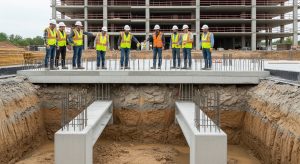
Professional piles and ring beams contractors determine optimal beam configurations based on soil analysis. They ensure beams are properly reinforced with steel and correctly connected to piles. Experienced contractors can save time through precast concrete solutions that are less dependent on weather conditions.
Factors influencing beam selection
Load-bearing capacity remains the primary consideration—accounting for both dead loads (structural weight) and live loads (furniture, people, snow). Span length, construction environment, and budget constraints likewise influence selection. For problematic soils, reinforced concrete ground beams offer greater certainty in terms of cost.
Beam placement and spacing strategies
Strategic placement connects foundation elements to maximize stability against lateral and vertical forces. Interior tie beams stabilize isolated column foundations, whereas perimeter grade beams frequently serve dual purposes.
Best Practices for Building on Weak Soil
Successful construction on challenging terrain demands precise methodology and expertise. Proper preparation and implementation can mean the difference between a stable structure and costly foundation failure.
Conducting a thorough soil investigation
Comprehensive soil testing forms the foundation of informed decision-making in construction. Professional piles and ring beams contractors rely on geotechnical engineers to analyze soil composition, density, moisture content, and strength parameters. These specialists perform Standard Penetration Tests, Cone Penetration Tests, and Atterberg limits to classify soil properties accurately. Thorough testing helps determine maximum load capacity, preventing settlement issues.
Collaborating with structural engineers
Engaging both geotechnical and structural engineers early in the planning process helps mitigate risks and prevent expensive delays. This interdisciplinary approach ensures foundation designs address site-specific challenges. Engineers can recommend appropriate ground improvement techniques like soil stabilization or reinforcement with geosynthetics. Throughout construction, maintaining open communication between all stakeholders is fundamental to project success.
Using reinforced concrete and steel
For unstable soil conditions, reinforced concrete elements provide the necessary stiffness to resist oscillatory motions. High-strength concrete combined with steel reinforcement offers superior compressive strength and durability in foundation systems. These materials effectively dampen vibrations and distribute structural loads across larger surface areas.
Incorporating drainage and moisture control
Proper drainage remains critical for foundation stability. Effective water management includes sloping the ground away from foundations, installing perimeter drains within coarse gravel beds, and connecting subsurface drainage to sump systems. Preventing water accumulation eliminates hydrostatic pressure that forces moisture through foundation cracks.
Monitoring for long-term performance
Implementing ongoing performance monitoring validates that actual soil behavior aligns with design expectations. Establishing baseline measurements before construction provides reference points for future comparisons. Regular inspections using instruments like inclinometers, piezometers, and settlement plates offer real-time data about soil movement and groundwater pressure.
Conclusion
Building on weak soil presents significant challenges, though structural beams offer effective solutions when properly implemented. Throughout this article, we’ve highlighted how soil quality fundamentally impacts the integrity of any construction project. Accordingly, the investment in appropriate foundation systems pays dividends by preventing costly repairs and dangerous structural failures.
As we’ve demonstrated, traditional foundations often fall short when confronted with expansive clay, loose sandy soils, or moisture-sensitive ground. Therefore, specialized beam systems become essential rather than optional. Grade beams and ring beams, when designed specifically for your soil conditions, create a robust framework that transfers building loads to stable zones while minimizing the effects of ground movement.
Above all, success depends on thorough soil investigation and collaboration with qualified professionals. Professional piles and ring beams contractors bring crucial expertise to identify the most appropriate beam configuration for your specific conditions. Additionally, incorporating proper drainage solutions and ongoing monitoring ensures long-term structural integrity.
The cost of implementing structural beam systems might seem substantial initially. Nevertheless, this expense pales in comparison to the financial burden of foundation failure, which can exceed $100,000 in high-risk areas. Ultimately, structural beams serve as the critical link between challenging soil conditions and lasting structural stability. We believe this investment in proper foundation support represents not just sound engineering but essential protection for what may be your most significant asset.